Novel crops in a warming world

Gardner, A.S., Gaston, K.J. & Maclean, I.M.D. 2021. Combining qualitative and quantitative methodology to assess prospects for novel crops in a warming climate. Agricultural Systems, 190, 103083.

Context: Climate change will alter the global distribution of climatically suitable space for many species, including agricultural crops. In some locations, warmer temperatures may offer opportunities to grow novel, high value crops, but non-climatic factors also inform agricultural decision-making. These non-climatic factors can be difficult to quantify and incorporate into suitability assessments, particularly for uncertain futures. 

Objective: To demonstrate how qualitative and quantitative techniques can be combined to assess crop suitability with consideration for climatic and non-climatic factors.

Methods: We carried out a horizon scanning exercise that used Delphi methodology to identify possible novel crops for a region in south-west England. We show how the results of the expert panel assessment could be combined with a crop suitability model that only considered climate to identify the best crops to grow in the region. 

Results and conclusions: Whilst improving climate and crop models will enhance the ability to identify environmental constraints to growing novel crops, we propose horizon scanning as a useful tool to understand constraints on crop suitability that are beyond the parameterisation of these models and that may affect agricultural decisions.

Significance: A similar combination of qualitative and quantitative approaches to assessing crop suitability could be used to identify potential novel crops in other regions and to support more holistic assessments of crop suitability in a changing world.


Moving out of the night

Cox, D.T.C., Gardner, A.S. & Gaston, K.J. 2021. Diel niche variation in mammals associated with expanded trait space. Nature Communications 12, 1753.

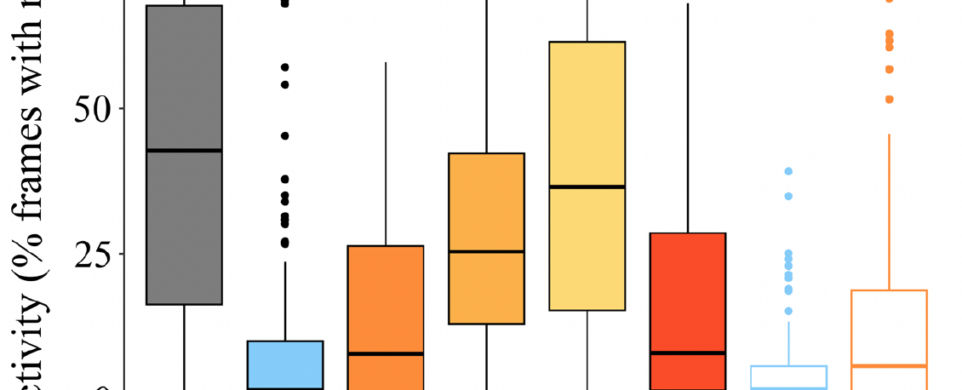
Mammalian life shows huge diversity, but most groups remain nocturnal in their activity pattern. A key unresolved question is whether mammal species that have diversified into different diel niches occupy unique regions of functional trait space. For 5,104 extant mammals we show here that daytime-active species (cathemeral or diurnal) evolved trait combinations along different gradients from those of nocturnal and crepuscular species. Hypervolumes of five major functional traits (body mass, litter size, diet, foraging strata, habitat breadth) reveal that 30% of diurnal trait space is unique, compared to 55% of nocturnal trait space. Almost half of trait space (44%) of species with apparently obligate diel niches is shared with those that can switch, suggesting that more species than currently realised may be somewhat flexible in their activity patterns. Increasingly, conservation measures have focused on protecting functionally unique species; for mammals, protecting functional distinctiveness requires a focus across diel niches.


Biomass of aliens

Blackburn, T.M. & Gaston, K.J. 2021. Contribution of non-native galliforms to annual variation in biomass of British birds. Biological Invasions, 23, 1549-1562.

Millions of individuals of two species of non-native galliform birds, the Common Pheasant (Phasianus colchicus) and Red-legged Partridge (Alectoris rufa) are released into the British countryside annually in late summer, supplementing established breeding populations of these two species. The biomass of birds involved in these releases has been compared to the British breeding bird biomass. However, the validity of this comparison is compromised because the biomass of wild birds varies across the year due to reproduction, mortality and migration. How the biomass of Common Pheasants and Redlegged Partridges compares to that of other British bird species in late summer, or across the whole year, is currently unknown. Here, we produce estimates of how British bird biomass varies across the year, to assess the contribution of the two non-native galliforms to this variation. We show that overall British bird biomass is probably lowest around the start of the breeding season in April, and peaks in late summer and autumn. We estimate that around a quarter of British bird biomass annually is contributed by Common Pheasants and Red-legged Partridges, and that at their peak in August these two species represent about half of all wild bird biomass in Britain.


Roads, pollutants & pollinators

Phillips, B.B, Bullock, J.M., Gaston, K.J., Hudson-Edwards, K.A., Bamford, M., Cruse, C., Dicks, L.V., Falagan, C., Wallace, C. & Osborne, J.L.2021. Impacts of multiple pollutants on pollinator activity in road verges. Journal of Applied Ecology 58, 1017-1029.

1. To tackle pollinator declines, there is a major need to increase the quantity of flower-rich habitats. Road verges offer one such opportunity but are exposed to diverse forms of pollution from roads and road traffic.

2. We carried out a broad initial assessment to establish if and how pollution affects the quality of road verges as pollinator foraging environments. We assessed the spatial distribution of pollution, flowers and pollinators in road verges, then used field experiments to simulate and measure the impacts of four ubiquitous and little studied forms of road pollution (noise, turbulence, dust and metals) on pollinator densities and foraging behaviour.

3. We found that pollinators in road verges were exposed to noise, turbulence, dust and metal pollution, which decreased with distance from the road edge but, with the exception of turbulence, extended more than 8 m into road verges.

4. Pollinator densities were lower closer to the road edge – particularly within first 2 m (55% lower than at 7-9 m) – where pollution is greatest. This was despite a similar density and species richness of flowers.

5. Simulated turbulence deterred pollinators by causing intermittent disturbance (reducing visit duration by up to 54%), and some pollinator taxa preferentially avoided concentrations of metals that were more frequently found in flowers within 2 m of roads (resulting in up to 75% fewer visits), while noise and dust had no apparent effect.

6. Synthesis and applications. Pollinators in road verges are exposed to many forms of pollution, and we found impacts of roadside-realistic levels of turbulence and metals on pollinator densities and foraging behaviour. Although the findings suggest that road verges are largely suitable for pollinator conservation, management enhancements should prioritise areas more than 2 m from the road edge, and verges along roads with relatively lower traffic densities.


Diverse impacts of artificial light

Sanders, D., Frago, E., Kehoe, R., Patterson, C. & Gaston, K.J. 2020. A meta-analysis of biological impacts of artificial light at night. Nature Ecology and Evolution [online early].

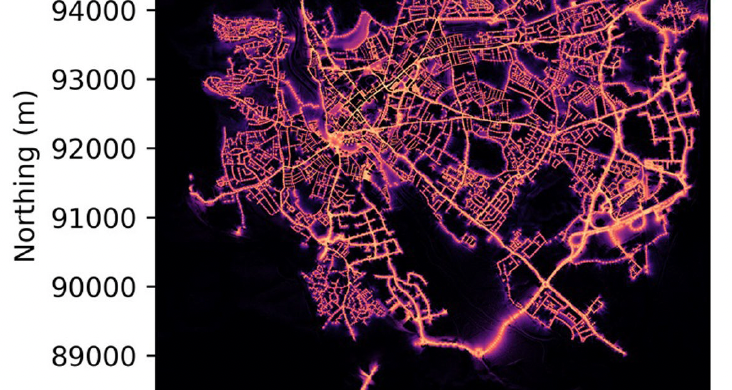
Natural light cycles are being eroded over large areas of the globe by the direct emissions and sky brightening that result from sources of artificial night-time light. This is predicted to affect wild organisms, particularly because of the central role that light regimes play in determining the timing of biological activity. Although many empirical studies have reported such effects, these have focused on particular species or local communities and have thus been unable to provide a general evaluation of the overall frequency and strength of these impacts. Using a new database of published studies, we show that exposure to artificial light at night induces strong responses for physiological measures, daily activity patterns and life history traits. We found particularly strong responses with regards to hormone levels, the onset of daily activity in diurnal species and life history traits, such as the number of offspring, predation, cognition and seafinding (in turtles). So far, few studies have focused on the impact of artificial light at night on ecosystem functions. The breadth and often strength of biological impacts we reveal highlight the need for outdoor artificial night-time lighting to be limited to the places and forms—such as timing, intensity and spectrum—where it is genuinely required by the people using it to minimize ecological impacts.


Biodiversity and planning

Baker, D.J., Maclean, I.M.D., Goodall, M. & Gaston, K.J. 2021. Species distribution modelling is needed to support ecological impact assessments. Journal of Applied Ecology [online early].

1. Legislation commonly mandates the mitigation of impacts to biodiversity in planning and development processes, with potential impacts identified through some form of ecological impact assessment. Yet, protections for biodiversity are frequently undermined because the distributions of priority species are poorly known in most locations at the spatial scales required to inform planning decisions (i.e. c. 1-100 ha).

2. Planning applications are often screened against opportunistic records to determine potential impacts to priority species. However, raw occurrence records provide information only on where a species has been detected and cannot be used to indicate if a species is likely to be absent from a site.

3. Inferences drawn from these data on the likelihood of a species being present at a site can only be correctly interpreted through an appropriate species distribution modelling (SDM) framework that ensures assumptions about the data and models are formalised and documented. We argue that SDM frameworks must be integrated into ecological impact assessments to improve support for biodiversity protections within planning and development processes.

4. Biases and uncertainties in opportunistic data create modelling challenges, but recent methodological advances can minimise their impacts on predictions. We advocate co-production with practitioners of SDM tools, mapping products and best-practice guidelines specific to planning processes.

5. Policy implications. The integration of species distribution modelling frameworks into ecological impact assessments will strengthen biodiversity protections in planning and development processes by ensuring methodological transparency and rigour in the interpretation of species occurrence data.


Asymmetrical warming

Cox, D.T.C., Maclean, I.M.D., Gardner, A.S. & Gaston, K.J. 2020. Global variation in diurnal asymmetry in temperature, cloud cover, specific humidity and precipitation and its association with Leaf Area Index. Global Change Biology [online early].

The impacts of the changing climate on the biological world vary across latitudes, habitats and spatial scales. By contrast, the time of day at which these changes are occurring has received relatively little attention. As biologically significant organismal activities often occur at particular times of day, any asymmetry in the rate of change between the daytime and night-time will skew the climatic pressures placed on them, and this could have profound impacts on the natural world. Here we determine global spatial variation in the difference in the mean annual rate at which near-surface daytime maximum and night-time minimum temperatures and mean daytime and mean night-time cloud cover, specific humidity and precipitation have changed over land. For the years 1983–2017, we derived hourly climate data and assigned each hour as occurring during daylight or darkness. In regions that showed warming asymmetry of >0.5°C (equivalent to mean surface temperature warming during the 20th century) we investigated corresponding changes in cloud cover, specific humidity and precipitation. We then examined the proportional change in leaf area index (LAI) as one potential biological response to diel warming asymmetry. We demonstrate that where night-time temperatures increased by >0.5°C more than daytime temperatures, cloud cover, specific humidity and precipitation increased. Conversely, where daytime temperatures increased by >0.5°C more than night-time temperatures, cloud cover, specific humidity and precipitation decreased. Driven primarily by increased cloud cover resulting in a dampening of daytime temperatures, over twice the area of land has experienced night-time warming by >0.25°C more than daytime warming, and has become wetter, with important consequences for plant phenology and species interactions. Conversely, greater daytime relative to night-time warming is associated with hotter, drier conditions, increasing species vulnerability to heat stress and water budgets. This was demonstrated by a divergent response of LAI to warming asymmetry.


Extending the parasitic day

Kehoe, R., Sanders, D., Cruse, D., Silk, M., Gaston, K.J., Bridle, J.R. & van Veen, F. 2020. Longer photoperiods through range shifts and artificial light lead to a destabilising increase in host-parasitoid interaction strength. Journal of Animal Ecology [online early].

  1. Many organisms are experiencing changing daily light regimes due to latitudinal range shifts driven by climate change and increased artificial light at night (ALAN). Activity patterns are often driven by light cycles, which will have important consequences for species interactions.
  2. We tested whether longer photoperiods lead to higher parasitism rates by a day-active parasitoid on its host using a laboratory experiment in which we independently varied day length and the presence of ALAN. We then tested whether reduced nighttime temperature tempers the effect of ALAN.
  3. We found that parasitism rate increased with day length, with ALAN intensifying this effect only when the temperature was not reduced at night. The impact of ALAN was more pronounced under short day length. Increased parasitoid activity was not compensated for by reduced lifespan, indicating that increased day length leads to an increase in total parasitism effects on fitness.
  4. To test the significance of increased parasitism rate for population dynamics, we developed a host-parasitoid model. The results of the model predicted an increase in time-to-equilibrium with increased day length and, crucially, a threshold day length above which interactions are unstable, leading to local extinctions.
  5. Here we demonstrate that ALAN impact interacts with day length and temperature by changing the interaction strength between a common day-active consumer species and its host in a predictable way. Our results further suggest that range expansion or ALAN induced changes in light regimes experienced by insects and their natural enemies will result in unstable dynamics beyond key tipping points in day length.

Personal detection

Gaston, K.J. 2020. Personalised ecology and detection functions. People and Nature [online early].

1. Direct interactions with nature are important for people’s health, well-being and support for pro-nature policies. There is an urgent need better to understand the structure and dynamics of these interactions, and how they differ among individual people, human populations and the communities to which they belong.

2. The determinants of these interactions have two components. First are the factors that influence whether someone undertakes actions that may lead to interactions with nature (e.g. looking through a window, going for a walk, travelling to the countryside). These factors have attracted significant attention. Second are the factors that influence what nature interactions are obtained when someone is present in a situation in which these could occur. These have received little explicit attention.

3. One way of formalizing understanding, and identifying gaps in knowledge, of the second group of factors is to consider human–nature interactions in terms of detection functions. Rather than using such functions for the estimation of species abundances, the purpose for which they were originally developed, they can be reorganized as descriptors of influences on people’s nature interactions.

4. This paper considers how the different variables contained within detection functions influence human–nature interactions, and in particular how the number of nature interactions a person has in a given place and time is shaped both by clearly ‘nature’-associated variables, such as the number of organisms present, and also by variables that are strongly influenced by characteristics of the observer, such as how they use or explore an area and their personal nature detection abilities.

5. Many issues explored in the context of human–nature interactions are then seen to concern these component variables of detection functions, and approaches to improving the frequency of interactions seen, in effect, to be targeted at affecting change in different ones of these variables.