New works…

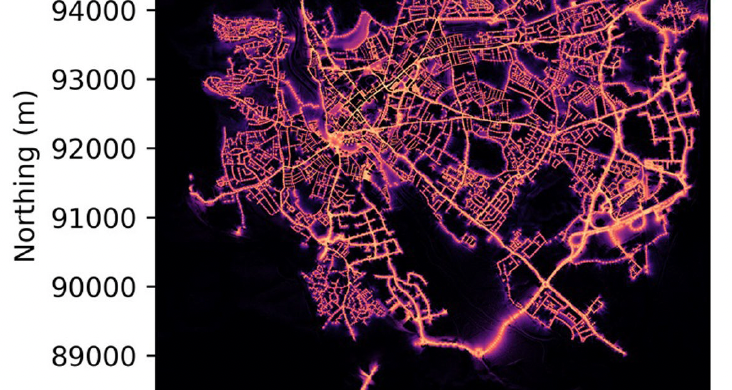
Coming very soon! The first paper, of what will hopefully be many, from the Ecolight project and on a new and exciting avenue of work for the research group.

Davies, T.W., Bennie, J. & Gaston, K.J. 2012. Street lighting changes the composition of invertebrate communities. Biology Letters, in press.


Fire and function

Cianciaruso, M.V. Silva, I.A., Batalha, M.A., Gaston, K.J. & Petchey O.L. 2012. The influence of fire on phylogenetic and functional structure of woody savannas: moving from species to individuals. Perspectives in Plant Ecology, Evolution and Systematics 14, 205-216.

Fire is a key determinant of tropical savanna structure and functioning. High fire frequencies are expected to assemble closely related species with a restricted range of functional trait values. Here we determined the effect of fire on phylogenetic and functional diversity of woody species and individuals in savanna communities under different fire frequencies. We found phylogenetic signals for one third of the functional traits studied. High numbers of fires simultaneously led to phylogenetic over dispersion and functional clustering when communities were represented by mean trait values with all traits that putatively should be affected or respond to fire. This finding is important, because it shows that the relationship between ecological processes and the phylogenetic structure of communities is not straightforward. Thus, we cannot always assume that close relatives are more similar in their ecological features. However, when considering a different set of traits representing different plant strategies (fire resistance/ avoidance, physiological traits and regeneration traits), the results were not always congruent. When asking how communities are assembled in terms of individuals (not species) the outcome was different from the species-based approach, suggesting that the realised trait values – rather than mean species trait values – have an important role in driving community assembly. Thus, intraspecific trait variability should be taken into account if we want fully to improve our mechanistic understanding of assembly rules in plant communities. [Image: M.V. Cianciaruso]


Costing policy simplification

Armsworth, P.R., Acs, S., Dallimer, M., Gaston, K.J., Hanley, N. & Wilson, P. 2012. The cost of policy simplification in conservation incentive programs. Ecology Letters 15, 406-414.

Incentive payments to private landowners are a commonly employed strategy to conserve biodiversity and enhance the supply of goods and services from ecosystems. To deliver cost-effective improvements in biodiversity, payment schemes must trade-off the inefficiencies that result from over-simplified policies with the administrative burdens of implementing more complex incentive designs. In this paper we examine the effectiveness of different payment schemes using field parameterized, ecological economic models of extensive grazing farms. We focus on profit maximising farm management plans and use bird species as a policy-relevant indicator of biodiversity. Common policy simplifications result in a 49–100% loss in biodiversity benefits depending on the conservation target chosen. Failure to differentiate prices for conservation improvements in space is particularly problematic. Additional implementation costs that accompany more complicated policies are worth bearing even when these constitute a substantial proportion (70% or more) of the payments that would otherwise have been given to farmers.


Urban birds become less migratory

Evans, K.L., Newton, J., Gaston, K.J., Sharp, S.P., McGowan, A. & Hatchwell, B.J. 2012. Colonisation of urban environments is associated with reduced migratory behaviour, facilitating divergence from ancestral populations. Oikos 121, 634-640.

How individuals colonising novel environments overcome the diverse suite of new selection pressures faced is a fundamental question in ecology and evolution. Urban environments differ markedly from the rural ones that they replace and successful colonisation of urban areas may therefore require local adaptation and phenotypic/genetic divergence from ancestral populations. Such a process would be facilitated by limited dispersal to and from the novel habitat. Here using stable isotopes we provide evidence that urban European blackbird Turdus merula populations tend to be more sedentary than rural ones. The increased sedentary behaviour of urban birds could promote further ecological divergence between rural and urban populations, such as the earlier breeding of urban blackbirds, and in some cases may contribute to their previously documented genetic divergence.


Ants in the fynbos

Braschler, B., Chown, S.L. & Gaston, K.J. 2012. The Fynbos and Succulent Karoo biomes do not have exceptional local ant richness. PLoS One 7, e31463.

The Fynbos and Succulent Karoo biomes at the southern tip of Africa are notable for having high regional plant diversity despite relatively low plant productivity. However, whilst local plant diversity varies it remains moderate. Here we show that for ants neither regional nor local richness are exceptional by global standards. It seems unlikely that the mechanisms which have contributed to the development of extraordinarily high regional plant diversity in these biomes have had a strong influence on the ants.


Size of conservation organisations

Armsworth, P.R., Fishburn, I.S., Davies, Z.G., Gilbert, J., Leaver, N. & Gaston, K.J. 2012. The size, concentration, and growth of biodiversity-conservation nonprofits. BioScience 62, 271-281.

Nonprofit organizations have a vital role to play in biological conservation, at local, regional and global scales. Understanding how the structure of conservation nonprofits influences their effectiveness in improving the plight of biodiversity has been identified as a priority research topic. We review empirical patterns in the size, concentration, and growth of over 1700 biodiversity-conservation nonprofits registered for tax purposes in the United States within the context of relevant economic theory. Conservation-nonprofit sizes vary by six to seven orders of magnitude and are positively skewed. Larger nonprofits access more revenue streams and hold more of their assets in land and buildings than smaller or midsized nonprofits do. The size of conservation nonprofits varies with the ecological focus of the organization, but the growth rates of nonprofits do not.


Well done!

Many congratulations to Barbara Goettsch on receiving the Harry Messel Award for Conservation Leadership. This recognizes exemplary service to the Species Survival Commission (SSC) of IUCN, especially from individuals who have made a specific contribution to species conservation on the ground or through their leadership, as part of the work of an SSC Specialist Group or Task Force. It is much deserved.


All change in the uplands

Hanley, N., Acs, S., Dallimer, M., Gaston, K.J., Graves, A., Morris, J. & Armsworth, P.R. 2012. Farm-scale ecological and economic impacts of agricultural change in the uplands. Land Use Policy 29, 587-597.

Recent decades have witnessed substantial losses of biodiversity in Europe, partly driven by the intensification of agricultural production. Future trends for upland birds will likely be impacted by changes in agricultural support regimes, such as those currently envisaged in on-going reforms of the Common Agricultural Policy. Using integrated ecological-economic models, we show that the impacts of future agricultural scenarios on farm incomes, land use and biodiversity are very diverse across policy scenarios and farm types. Moreover, each policy scenario produces unequal distributions of farm income changes and gains and losses in alternative biodiversity indicators. This shows that generalisations of the effects of policy and pricing changes on farm incomes, land uses and biodiversity can be misleading.


When birds depend on elsewhere

Dallimer, M., Skinner, A.M.J., Davies, Z.G., Armsworth, P.R. & Gaston, K.J. 2012. Multiple habitat associations: the role of offsite habitat in determining onsite avian density and species richness. Ecography 35, 134-145.

Here we document an example of what is probably a widespread but poorly understood phenomenon, namely how the abundances of individual species and of assemblages depend not only on characteristics of a given site on which they occur but also on the characteristics of sites comprising other habitats on which they are dependent. Such interdependencies are fundamentally important to conservation management, particularly because many threatened species move between different habitats daily or seasonally.


Biodiversity and feeling good

Dallimer, M., Irvine, K.N., Skinner, A.M.J., Davies, Z.G., Rouquette, J.R., Armsworth, P.R., Maltby, L., Warren, P.H., Gaston, K.J. 2012. Biodiversity and the feel-good factor: understanding associations between self-reported human well-being and species richness. BioScience 62, 46-55.

The natural environment provides humankind with a diverse array of benefits. Not all of these are well understood. For example, there is substantial evidence that people living in cities gain benefits to psychological well-being from greenspaces, but which components of those spaces are most important in this regard are unclear. Here we report the lack of a consistent relationship between actual plant, butterfly, and bird species richness and the psychological well-being of urban greenspace visitors. Instead, well-being shows a positive relationship with the richness that the greenspace users perceived to be present. One plausible explanation for this discrepancy, which we investigate, is that people generally have poor biodiversity-identification skills. The apparent importance of perceived species richness and the mismatch between reality and perception pose a serious challenge for aligning conservation and human well-being agendas.