Windows on nature

Soga, M. & Gaston, K.J. 2025. Health benefits of viewing nature through windows: A meta-analysis. BioScience 75, 628-636.

Experiencing nature offers numerous health and well-being benefits, particularly for urban residents. Although the benefits of visiting natural environments are well documented, less is known about the health effects of experiencing nature without going outdoors—in particular, viewing it through building windows. This meta-analysis synthesizes findings from 28 studies encompassing 104 results to examine the relationship between window views of nature and human health. Improvements were reported across various physiological, psychological, and physical health measures, with most studies focused on psychological outcomes. The meta-analytic results indicate consistently positive effects, with particularly strong benefits in studies using physiological health measures and focusing on nature in urban settings. Although some publication bias was detected, correcting for it did not change the overall conclusions. These findings highlight the potential of integrating nature views into built environments as a practical strategy for enhancing public health, particularly in urban areas. 


Worms by light

Cai, J., Bennie, J. & Gaston, K.J. 2025. Altered surface behaviour in earthworms (Lumbricus terrestris) under artificial light at night. Oecologia 207, 114.

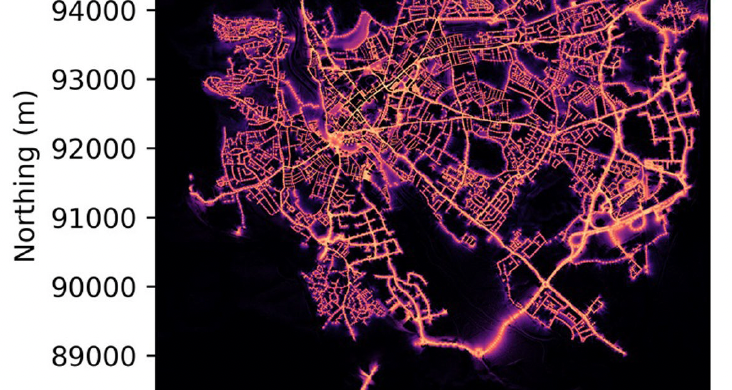
Artificial light at night (ALAN) has been spreading rapidly globally, disrupting animal physiology, behaviour and associated ecosystem processes. However, impacts on soil-dwelling animals that are nocturnally active aboveground remain under explored. Here, we examined these for the earthworm Lumbricus terrestris L., an ecosystem engineer that frequently surfaces at night. We recorded four types of L. terrestris nighttime surface behaviour, including overall surface activity, and three finer categories: risk exploration before surfacing, foraging and over-surface exploration. One experiment (controlled temperature-room-based) tested these behavioural responses to seven ALAN levels, whilst another (field-based) investigated whether behavioural responses can consequently affect litter removal and soil respiration. In the controlled-temperature room, compared to darkness, L. terrestris significantly decreased their overall nighttime foraging at ALAN levels of 10 lx and above, with these negative ALAN effect sizes increasing with light intensity. With more risk exploration before surfacing, L. terrestris still showed greatly reduced foraging activity at the 10 lx ALAN level in the field. However, such altered behaviour did not cause clear patterns in either litter removal or soil respiration. Our results confirm that 10 lx ALAN (or potentially lower) is effective in disrupting L. terrestris nighttime surface behaviour, but this may have limited impacts on short-term C cycling.


Recovering farmland nature

Baker, D.J., Nye, C., Wheeler, R., Masquelier, C., Binner, A., Gaston, K.J., Heard, M.S., Lobley, M., Smith, D. & Maclean, I.M.D. 2025. Aligning strategic and participatory approaches to agri-environment scheme design and implementation to enhance nature recovery outcomes. People and Nature 7, 329-345.

1. Nature recovery requires the provisioning of resources in the right place and in sufficient quantities to support wildlife populations and improve ecological processes. Agri-environment schemes (AES) have been a major mechanism for delivering environmental management across EU-farmed landscapes, but measured benefits to nature are often negligible in large part due to a lack of strategic spatial targeting of management actions.

2. As an example, AES in England are often delivered using a participatory strategy, typically at individual farm scale, with types of management agreements and uptake reflecting the business model and interests of each farm. However, this implementation model can result in poorly distributed conservation resources and, consequently, a failure to recover nature across larger scales, even if individual agreements are delivered well.

3. Achieving effective, large-scale nature recovery through AES requires aligning its implementation with spatially targeted approaches that prioritise specific conservation goals. We discuss the rationale for, and major barriers to, aligning AES design and implementation to these approaches. We then highlight how, through the framework of systematic conservation planning, both the strategic and participatory components of AES could be aligned better to enhance nature recovery outcomes.

4. To ensure AES help achieve nature recovery goals, clear and measurable targets must be set with the type and spatial configuration of actions designed to enable meeting targets. Strategic spatial targeting must also be carried out with the implementation phase in mind, accounting for socio-economic opportunities and barriers to engagement and acknowledging that uncertainties around farm-scale implementation mean plans must be adaptable. Participatory approaches for AES design and implementation that support the delivery of spatially targeted management actions are required, most notably by facilitating collaboration or cooperation across farm holdings.

5. For AES to contribute effectively to nature recovery goals, aligning strategic and participatory approaches in its design and implementation is crucial. This requires uniting knowledge across disciplines and cultures and ensuring that information is shared to support progressive refinement of scheme design and guidance towards achieving overall nature recovery goals.


Shaping connection to nature

Soga, M. & Gaston, K.J. 2025. Cross-country variation in people’s connection to nature. One Earth 8, 101194.

Enhancing pro-nature behavior across societies is a key sustainability challenge, with people’s connection to nature recognized as a primary driver. Understanding how this connection varies across countries and regions and the factors influencing it is, therefore, a crucial step in addressing this challenge. However, this remains poorly understood due to the scarcity of cross-country studies, particularly outside the Global North. Using data from a survey spanning 23 countries worldwide, we identified substantial variations in individuals’ psychological (cognitive) and physical (experiential) connections to nature. These differences are influenced by several country-level factors, such as socioeconomic development and the extent of cultivated land, alongside individual-level factors like education level and social status. The broad variation in connection to nature revealed by our study provides valuable insights for predicting large-scale spatial patterns of this connection and identifying regions where targeted efforts are most needed to strengthen it effectively.


16th horizon scan

Sutherland, W.J., Brotherton, P.N.M., Butterworth, H.M., Clarke, S.J., Davies, T.E., Doar, N., Esmail, N., Fleishman, E., Gaston, K.J., Herbert-Read, J.E., Hughes, A.C., Hughes, J., Kaartokallio, H., Koh, L.P., Kumar, R., Lickorish, F.A., Littler, H., Palardy, J.E., Pearce-Higgins, J.W., Peck, L.S., Pettorelli, N., Pretty, J., Schloss, I.R., Spalding, M.D., ten Brink, D., Tew, E.R., Timoshyna, A., Tubbs, N., Watson, J.E.M., Wentworth, J., Wilson, J.D. & Thornton, A. 2025. A horizon scan of biological conservation issues for 2025. Trends in Ecology and Evolution 40, 80-89.

We discuss the outcomes of our 16th horizon scan of issues that are novel or represent a considerable step-change and have the potential to substantially affect conservation of biological diversity in the coming decade. From an initial 96 topics, our international panel of 32 scientists and practitioners prioritised 15 issues. Technological advances are prominent, including metal and non-metal organic frameworks, deriving rare earth elements from macroalgae, syn-thetic gene drives in plants, and low-emission cement. We include new insights into accelerated impacts of changes to Antarctic ice masses and air and water quality. We hope that anticipating and mitigating negative impacts, and making best use of new opportunities related to these issues, will contribute to better outcomes for biological diversity. 


Not always geography

Zhang, W., Grenyer, R., Gaston, K.J. & Sheldon, B.C. 2024. Challenging the geographic bias in recognising large-scale patterns of diversity change. Diversity and Distributions 30, 13-25.

Aim: Geographic structure is a fundamental organising principle in ecological and Earth sciences, and our planet is conceptually divided into distinct geographic clusters (e.g. ecoregions and biomes) demarcating unique diversity patterns. Given recent advances in technology and data availability, however, we ask whether geographically clustering diversity time-series should be the default framework to identify meaningful patterns of diversity change.
Location: North America.
Taxon: Aves.
Methods: We first propose a framework that recognises patterns of diversity change based on similarities in the behaviour of diversity time-series, independent of their specific or relative spatial locations. Specifically, we applied an artificial neural network approach, the self-organising map (SOM), to group time-series of over 0.9 million observations from the North American Breeding Birds Survey (BBS) data from 1973 to 2016. We then test whether time-series identified as having similar behaviour are geographically structured.
Results: We find little evidence of strong geographic structure in patterns of diversity change for North American breeding birds. The majority of the recognised diversity time-series patterns tend to be indistinguishable from being independently distributed in space.
Main Conclusions: Our results suggest that geographic proximity may not correspond to shared temporal trends in diversity; assuming that geographic clustering is the basis for analysis may bias diversity trend estimation. We suggest that approaches that consider variability independently of geographic structure can serve as a useful addition to existing organising rules of biodiversity time-series.


Environmental impacts of EO

Wilkinson, R., Mleczko, M.M., Brewin, R.J.W., Gaston, K.J., Mueller, M., Shutler, J.D., Yan, X. & Anderson, K. 2024. Environmental impacts of earth observation data in the constellation and cloud computing era. Science of the Total Environment 909, 168584.

 Numbers of Earth Observation (EO) satellites have increased exponentially over the past decade reaching the current population of 1193 (January 2023). Consequently, EO data volumes have mushroomed and data storage and processing have migrated to the cloud. Whilst attention has been given to the launch and in-orbit environmental impacts of satellites, EO data environmental footprints have been overlooked. These issues require urgent attention given data centre water and energy consumption, high carbon emissions for computer component manufacture, and difficulty of recycling computer components. Doing so is essential if the environmental good of EO is to withstand scrutiny. We provide the first assessment of the EO data life-cycle and estimate that the current size of the global EO data collection is ~807 PB, increasing by ~100 PB/year. Storage of this data volume generates annual CO2 equivalent emissions of 4101 t. Major state-funded EO providers use 57 of their own data centres globally, and a further 178 private cloud services, with considerable duplication of datasets across repositories. We explore scenarios for the environmental cost of performing EO functions on the cloud compared to desktop machines. A simple band arithmetic function applied to a Landsat 9 scene using Google Earth Engine (GEE) generated CO2 equivalent (e) emissions of 0.042–0.69 g CO2e (locally) and 0.13–0.45 g CO2e (European data centre; values multiply by nine for Australian data centre). Computation-based emissions scale rapidly for more intense processes and when testing code. When using cloud services such as GEE, users have no choice about the data centre used and we push for EO providers to be more transparent about the location-specific impacts of EO work, and to provide tools for measuring the environmental cost of cloud computation. The EO community as a whole needs to critically consider the broad suite of EO data life-cycle impacts.


15th horizon scan

Sutherland, W.J., Bennett, C., Brotherton, P.N.M., Butchart, S.H.M., Butterworth, H.M., Clarke, S.J., Esmail, N., Fleishman, E., Gaston, K.J., Herbert-Read, J.E., Hughes, A.C., James, J., Kaartokallio, H., Le Roux, X., Lickorish, F.A., Newport, S., Palardy, J.E., Pearce-Higgins, J.W., Peck, L.S., Pettorelli, N., Primack, R.B., Primack, W.E., Schloss, I.R., Spalding, M.D., ten Brink, D., Tew, E., Timoshyna, A., Tubbs, N., Watson, J.E.M., Wentworth, J., Wilson, J.D. & Thornton, A. 2024. A horizon scan of global biological conservation issues for 2024. Trends in Ecology and Evolution 39, 89-100.

We present the results of our 15th horizon scan of novel issues that could influence biological conservation in the future. From an initial list of 96 issues, our international panel of scientists and practitioners identified 15 that we consider important for societies worldwide to track and potentially respond to. Issues are novel within conservation or represent a substantial positive or negative step-change with global or regional extents. For example, new sources of hydrogen fuel and changes in deep-sea currents may have profound impacts on marine and terrestrial ecosystems. Technological advances that may be positive include benchtop DNA printers and the industrialisation of approaches that can create high-protein food from air, potentially reducing the pressure on land for food production.


Shifting baselines are common

Soga, M. & Gaston, K.J. 2024. Global synthesis indicates widespread occurrence of shifting baseline syndrome. BioScience 74, 686-694.

As environmental degradation continues at local, regional, and global levels, people’s accepted norms for natural environmental conditions are likely to decline. This phenomenon, known as shifting baseline syndrome (SBS), is increasingly recognized as a likely major obstacle to addressing global environmental challenges. However, the prevalence of SBS remains uncertain. We conducted an extensive systematic review, synthesizing existing research on people’s perceived environmental baselines. Our analysis, based on 73 case studies, suggests that SBS is a widespread global phenomenon, occurring across diverse socioeconomic, environmental, and cultural settings. We observed that younger individuals tend to hold lower environmental baselines across various environmental contexts, including climate change, natural resource depletion, biodiversity loss, and pollution. An upward shift in perceived environmental baselines among younger generations was rarely observed. These results underscore the challenge that SBS poses when policy and management responses to environmental degradation are influenced by perceived natural environmental norms.


Nature interactions & people’s behaviour

Soga, M. & Gaston, K.J. 2024. Do people who experience more nature act more to protect it? A meta-analysis. Biological Conservation 289, 110417.


Addressing the global environmental problems facing our planet requires a significant shift in human behaviour. Personal experiences with nature are suggested to be a key driver of pro-environmental behaviour. However, the validity of this idea is uncertain. Using a systematic literature review and meta-analysis, we show that direct experiences of nature are positively associated with a wide range of positive actions towards the natural environment, including recycling, energy conservation, green purchasing, and participating in conservation volunteering. Nature experiences were more strongly linked to ‘pro-biodiversity’ behaviours (actions that specifically focussed on wildlife and habitat conservation) than other general pro-environmental behaviours, although the difference was statistically marginal. There was no difference in the strength of the association with pro-environmental behaviour between nature experiences during childhood and those during other times in life. Adjustment for publication bias did not produce significantly different results. While highlighting a need for experimental or longitudinal study designs in this area, our results suggest that enhancing people’s engagement with nature can be a valuable strategy for promoting behaviour change that helps address global environmental issues.