
Effects of artificial night-time light

Gaston, K. J., Duffy, J. P., Gaston, S., Bennie, J. & Davies, T. W. (2014) Human alteration of natural light cycles: causes and ecological consequences. Oecologia 176, 917–931.

Artificial light at night is profoundly altering natural light cycles, particularly as perceived by many organisms, over extensive areas of the globe. This alteration comprises the introduction of light at night at places and times at which it has not previously occurred, and with different spectral signatures. Given the long geological periods for which light cycles have previously been consistent, this constitutes a novel environmental pressure, and one for which there is evidence for biological effects that span from molecular to community level. Here we provide a synthesis of understanding of the form and extent of this alteration, some of the key consequences for terrestrial and aquatic ecosystems, interactions and synergies with other anthropogenic pressures on the environment, major uncertainties, and future prospects and management options. This constitutes a compelling example of the need for a thoroughly interdisciplinary approach to understanding and managing the impact of one particular anthropogenic pressure. The former requires insights that span molecular biology to ecosystem ecology, and the latter contributions of biologists, policy makers and engineers.

Download pdf


Marine artificial light

Davies, T. W., Duffy, J. P., Bennie, J. & Gaston, K. J. (2014) The nature, extent and ecological consequences of marine light pollution. Frontiers in Ecology and the Environment 12(6), 347–355.

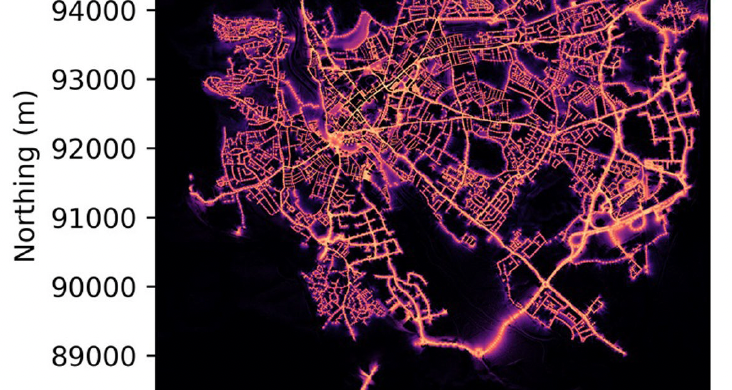
IMG_0272Despite centuries of use, artificial light at night has only recently been recognized as a cause for environmental concern. Its global extent and ongoing encroachment into naturally lit ecosystems has sparked scientific interest into the many ways in which it may negatively affect human health, societal attitudes, scientific endeavors, and biological processes. Yet, perhaps because sources of artificial light are largely land based, the potential for artificial light pollution to interfere with the biology of the ocean has not been explored in any detail. There is little information on how light pollution affects those species, behaviors, and interactions that are informed by the intensity, spectra, and periodicity of natural nighttime light in marine ecosystems. Here, we provide an overview of the extent of marine light pollution, discuss how it changes the physical environment, and explore its potential role in shaping marine ecosystems.

Download pdf


How effective are Protected Areas?

Coetzee, B.W.T., Gaston, K.J. & Chown, S.L. (2014) Local Scale Comparisons of Biodiversity as a Test for Global Protected Area Ecological Performance: A Meta-Analysis. PLoS ONE 9(8): e105824.

IMG_0149Terrestrial protected areas (PAs) are cornerstones of global biodiversity conservation. Their efficacy in terms of maintaining biodiversity is, however, much debated. Studies to date have been unable to provide a general answer as to PA conservation efficacy because of their typically restricted geographic and/or taxonomic focus, or qualitative approaches focusing on proxies for biodiversity, such as deforestation. Given the rarity of historical data to enable comparisons of biodiversity before/after PA establishment, many smaller scale studies over the past 30 years have directly compared biodiversity inside PAs to that of surrounding areas, which provides one measure of PA ecological performance. Here we use a meta-analysis of such studies (N = 86) to test if PAs contain higher biodiversity values than surrounding areas, and so assess their contribution to determining PA efficacy. We find that PAs generally have higher abundances of individual species, higher assemblage abundances, and higher species richness values compared with alternative land uses. Local scale studies in combination thus show that PAs retain more biodiversity than alternative land use areas. Nonetheless, much variation is present in the effect sizes, which underscores the context-specificity of PA efficacy.


Mapping Ecosystem Services

Casalegno, S., Bennie, J.J., Inger, R. & Gaston, K.J. (2014) Regional Scale Prioritisation for Key Ecosystem Services, Renewable Energy Production and Urban Development. PLoS ONE 9(9): e107822.

Although the importance of addressing ecosystem service benefits in regional land use planning and decision-making is evident, substantial practical challenges remain. In particular, methods to identify priority areas for the provision of key ecosystem services and other environmental services (benefits from the environment not directly linked to the function of ecosystems) need to be developed. Priority areas are locations which provide disproportionally high benefits from one or more service. Here we map a set of ecosystem and environmental services and delineate priority areas according to different scenarios. Each scenario is produced by a set of weightings allocated to different services and corresponds to different landscape management strategies which decision makers could undertake. Using the county of Cornwall, U.K., as a case study, we processed gridded maps of key ecosystem services and environmental services, including renewable energy production and urban development. We explored their spatial distribution patterns and their spatial covariance and spatial stationarity within the region. Finally we applied a complementarity-based priority ranking algorithm (zonation) using different weighting schemes. Our conclusions are that (i) there are two main patterns of service distribution in this region, clustered services (including agriculture, carbon stocks, urban development and plant production) and dispersed services (including cultural services, energy production and floods mitigation); (ii) more than half of the services are spatially correlated and there is high non-stationarity in the spatial covariance between services; and (iii) it is important to consider both ecosystem services and other environmental services in identifying priority areas. Different weighting schemes provoke drastic changes in the delineation of priority areas and therefore decision making processes need to carefully consider the relative values attributed to different services.


Land-sharing or land-sparing?

Soga, M., Yamaura, Y., Koike, S. & Gaston, K.J. (2014) Land sharing vs. land sparing: does the compact city reconcile urban development and biodiversity conservation? Journal of Applied Ecology, 51, 1378-1386.

PastedGraphic-2As cities around the world rapidly expand, there is an urgent need to implement the best development form to minimize the negative impacts of urbanization on native biodiversity. Two divergent forms for the expansion of cities are land-sharing and land-sparing developments. To date, their relative benefits for biodiversity conservation are poorly understood. We quantified the relative conservation benefits of land-sharing and land-sparing developments for butterflies and ground beetles in Tokyo, Japan. For each insect species, we determined which approach resulted in a larger total population size. At a higher level of urbanization (higher number of buildings in a landscape), land sparing rather than land sharing resulted in a higher total population size for the majority species of both taxa. However, at a lower level of urbanization, butterflies and ground beetles showed different responses to city development forms. Ground beetles had their highest total population sizes under land sparing, whereas for butterflies, especially open-land and matrix-dwelling species, larger populations were achieved under land sharing. The negative impacts of urbanization on biodiversity differ greatly between land-sharing and land-sparing development forms. We also revealed that the relative conservation benefits of land sharing and land sparing depend on the level of urbanization. In areas that will be heavily urbanized in the future, city planners and policymakers should adopt approaches that follow a land-sparing strategy and that keep large blocks of greenspace free from development. At lower levels of urbanization, on the other hand, as land sharing was suggested to be the better strategy for many butterfly species, a hybrid development form could be adopted that integrates areas of land sharing and land sparing, which might have the additional benefit of enhancing the delivery of some ecosystem services by bringing nature and people closer together in some areas.


City trees and soil carbon

Edmondson, J.L., O’Sullivan, O.S., Inger, R., Potter, J., McHugh, N., Gaston, K.J. & Leake, J.R. 2014. Urban tree effects on soil organic carbon. PLoS One 9, e101872.

Urban trees sequester carbon into biomass and provide many ecosystem service benefits aboveground leading to worldwide tree planting schemes. Since soils hold ~75% of ecosystem organic carbon, understanding the effect of urban trees on soil organic carbon (SOC) and soil properties that underpin belowground ecosystem services is vital. We use an observational study to investigate effects of three important tree genera and mixed-species woodlands on soil properties (to 1 m depth) compared to adjacent urban grasslands. Aboveground biomass and belowground ecosystem service provision by urban trees are found not to be directly coupled. Indeed, SOC enhancement relative to urban grasslands is genus-specific being highest under Fraxinus excelsior and Acer spp., but similar to grasslands under Quercus robur and mixed woodland. Tree cover type does not influence soil bulk density or C:N ratio, properties which indicate the ability of soils to provide regulating ecosystem services such as nutrient cycling and flood mitigation. The trends observed in this study suggest that genus selection is important to maximise long-term SOC storage under urban trees, but emerging threats from genus-specific pathogens must also be considered.


Woodlands as refuges in cities

Soga, M., Yamaura, Y., Koike, S. & Gaston, K.J. 2014. Woodland remnants as an urban wildlife refuge: a cross-taxonomic assessment. Biodiversity and Conservation 23, 649-659.

Urban nature is crucial for the quality of human life both within cities and beyond. In many developed cities, the numbers of restoration-through-revegetation projects have rapidly increased over the decades. However, the extent to which revegetated habitats perform compensatory roles for remnant habitats is poorly understood. We compared butterfly and ground beetle assemblages among three park types (five remnant parks, four newly established parks and five old established parks) and seven built-up sites in Tokyo, central Japan. Butterflies were classified into woodland or open-land and into patch-dependent or matrix-dwelling species. For both taxa, remnant parks and built-up sites had the highest and lowest species richness and abundance, respectively. Although the richness and abundance of open-land and matrix-dwelling butterflies did not differ among the three park types, those of woodland and patch-dependent species were significantly highest in remnant parks. In short, after 50 years, established parks did not attain the same insect assemblages as those in remnant parks. These results illustrate that whist revegetation is an effective and fast-acting conservation measure for generalist species (i.e., widely distributed species), this value is limited for specialists. In highly urbanised landscapes, therefore, even small remnant woodlands provide important refuges for urban wildlife. Remnant protection programs at the early stage of city development would decide the fate of urban biodiversity.


Opportunity or orientation?

Lin, B.B, Fuller, R.A., Bush, R., Gaston, K.J. & Shanahan, D.F. 2014. Opportunity or orientation?: Who uses urban parks and why. PLoS One 9, e87422.

There is growing recognition that interactions with nature provide many desirable human well-being outcomes, yet increasing urbanization is degrading the quality and quantity of nature experiences. Thus, it has become increasingly important to understand how and why urban dwellers interact with nature. Studies of urban green space use have largely focused on the availability and ease of access to green space, suggesting that greater opportunities to experience such space will lead to increased use. However, a growing literature emphasizes the potential for an individual’s nature orientation to affect their interaction with green space. Here we measure the importance of both opportunity and orientation factors in explaining urban park use. An urban lifestyle survey was deployed across Brisbane, Australia in November 2012 to assess patterns of green space use. Participants were asked to provide information on demographics, private yard use, park visitations in the past week, and their orientation toward nature. About 60% of those surveyed had visited a park in the past week, and while this park user population had significantly greater nearby park coverage (within a 250 m radius), a much stronger determinant of visitation was their higher nature orientation, suggesting that while both opportunity and orientation are important drivers for park visitation, nature orientation is the primary effect. Park users also spent significantly more time in their yards than non-park users, suggesting that yard use does not necessarily compensate for lower park use. Park users with stronger nature orientation (i) spent more time in their yard, (ii) traveled further to green spaces, and (iii) made longer visits than park visitors with weaker nature orientation. Overall, our results suggest that measures to increase people’s connection to nature could be more important than measures to increase urban green space availability if we want to encourage park visitation.


Flickering of the light

Inger, R., Bennie, J., Davies, T.W. & Gaston, K.J. 2014. Potential biological and ecological effects of flickering artificial light. PLoS One 9, e98631.

Organisms have evolved under stable natural lighting regimes, employing cues from these to govern key ecological processes. However, the extent and density of artificial lighting within the environment has increased recently, causing widespread alteration of these regimes. Indeed, night-time electric lighting is known significantly to disrupt phenology, behaviour, and reproductive success, and thence community composition and ecosystem functioning. Until now, most attention has focussed on effects of the occurrence, timing, and spectral composition of artificial lighting. Little considered is that many types of lamp do not produce a constant stream of light but a series of pulses. This flickering light has been shown to have detrimental effects in humans and other species. Whether a species is likely to be affected will largely be determined by its visual temporal resolution, measured as the critical fusion frequency. That is the frequency at which a series of light pulses are perceived as a constant stream. Here we use the largest collation to date of critical fusion frequencies, across a broad range of taxa, to demonstrate that a significant proportion of species can detect such flicker in widely used lamps. Flickering artificial light thus has marked potential to produce ecological effects that have not previously been considered.

Download pdf


Finding carbon in city soils

Edmondson, J.L., Davies, Z.G., McCormack, S.A., Gaston, K.J. & Leake, J.R. 2014. Land-cover effects on soil organic carbon stocks in a European city. Science of the Total Environment 472, 444-453.

Soil is the vital foundation of terrestrial ecosystems storing water, nutrients, and almost three-quarters of the organic carbon stocks of the Earth’s biomes. Soil organic carbon (SOC) stocks vary with land-cover and land-use change, with significant losses occurring through disturbance and cultivation. Although urbanisation is a growing contributor to land-use change globally, the effects of urban land-cover types on SOC stocks have not been studied for densely built cities. Additionally, there is a need to resolve the direction and extent to which greenspace management such as tree planting impacts on SOC concentrations. Here, we analyse the effect of land-cover (herbaceous, shrub or tree cover), on SOC stocks in domestic gardens and non-domestic greenspaces across a typical mid-sized U.K. city (Leicester, 73 km2, 56% greenspace), and map citywide distribution of this ecosystem service. SOCwas measured in topsoil and compared to surrounding extra-urban agricultural land. Average SOC storage in the city’s greenspace was 9.9 kg m−2, to 21 cm depth. SOC concentrations under trees and shrubs in domestic gardens were greater than all other land-covers, with total median storage of 13.5 kg m−2 to 21 cm depth, more than 3 kg m−2 greater than any other land-cover class in domestic and non-domestic greenspace and 5 kg m−2 greater than in arable land. Land-cover did not significantly affect SOC concentrations in non-domestic greenspace, but values beneath trees were higher than under both pasture and arable land, whereas concentrations under shrub and herbaceous land-covers were only higher than arable fields. We conclude that although differences in greenspace management affect SOC stocks, trees only marginally increase these stocks in non-domestic greenspaces, but may enhance them in domestic gardens, and greenspace topsoils hold substantial SOC stores that require protection from further expansion of artificial surfaces e.g. patios and driveways.