Ensuring protected areas protect

Gardner, A.S., Baker, D.J., Mosedale, J.R., Gaston, K.J. & Maclean, I.M.D. 2023. The effectiveness of UK protected areas in preventing local extinctions. Conservation Letters 16, e12980.

Protected areas (PAs) are a core component in global efforts to prevent further declines in biodiversity. We examine whether the United Kingdom’s PA portfolio has reduced local extinctions of breeding birds and consider how the characteristics of different PA designations may have affected conservation outcomes. We use breeding bird atlas data to calculate the proportion of species in each 10 x 10-km grid cell confirmed as breeding in 1988–1991 but not in 2008–2011. We find that the protection offered by PAs is little to no different from that of the wider landscape and, depending on the type of PA, attribute this to PAs being either too small or not managed for biodiversity outcomes. To meet the ambitious new global targets for expanding PA coverage set at the 15th UN Biodiversity Conference, all countries need to monitor and ensure PA effectiveness; high PA coverage does not guarantee that biodiversity is protected.


How we interact with nature

Evans, M.J., Gaston, K.J., Cox, D.T.C. & Soga, M. 2023. The research landscape of direct, sensory human-nature interactions. People and Nature 5, 1893-1907.

1. Gaining a comprehensive understanding of the human–nature interactions research landscape can benefit researchers by providing insights into the most relevant topics, popular research areas and the distribution of topics across different disciplines, journals and regions.

2. The research literature on direct human–nature interactions is constituted from a rich and diverse spectrum of disciplines. This multidisciplinary structure poses challenges in keeping up with developments and trends.

3. We conducted a multidisciplinary text-analysis review of research on direct, sensory human–nature interactions to understand the main topics of research, the types of interactions, the disciplines within which they manifest in the literature, their growth through time and their global localities and contexts.

4. Our analysis of 2773 articles showed that there has been recent growth in research interest in positive human–nature interactions that is biased towards high-income countries. There is a substantial body of research on negative human–nature interactions, mostly from the medical fields, which is distinct from research on positive human–nature interactions in other fields such as ecology, psychology, social science, environmental management and tourism. Of particular note is the very large amount of medical research on the causes and consequences of snake bites, particularly in Asia.

5. Understanding the relationship between these two contrasting types of interactions is of significant practical importance. More recent attention towards positive human–nature interactions in high-income societies biases views of the relationship between people and nature.

6. Research into human–nature interactions needs to take the next step towards a unified and holistic understanding of the benefits and costs of direct experiences with nature. This step is crucial to achieve a more sustainable future that benefits both biodiversity and human society, during great environmental and climatic change.


Gardening for biodiversity

Delahay, R.J., Sherman, D., Soyalan, B. & Gaston, K.J. 2023. Biodiversity in residential gardens: a review of the evidence base. Biodiversity and Conservation 32, 4155-4179.

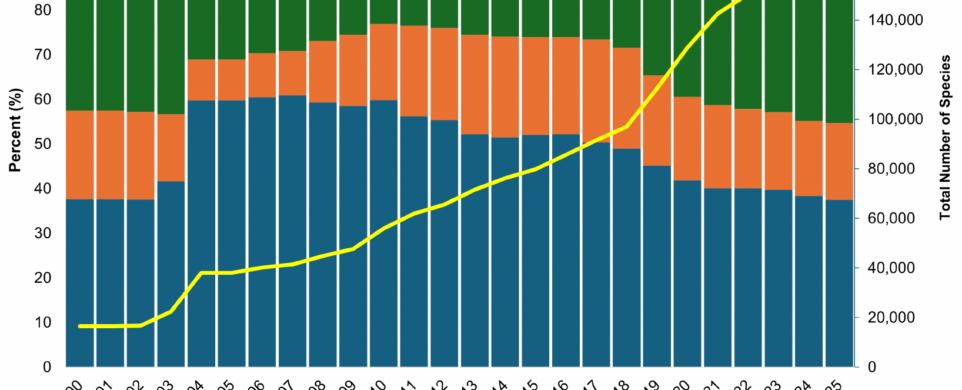
Residential gardens are a principal component of urban green infrastructure throughout the world and their potential positive contributions to biodiversity are increasingly recognised. But the characteristics of gardens reflect the needs, values and interests of individual households. The present review summarises evidence from studies of garden biodiversity published in the scientific literature, describes major themes and identifies important knowledge gaps. A search of the Web of Science database identified 408 published articles on the biodiversity of residential gardens (1981–2022), with numbers increasing over time and a strong bias towards Europe (32.1%) and North America (23.8%). Plants and invertebrates were most frequently studied, and species diversity was often correlated with garden size and habitat complexity. Botanic composition and vegetation cover were often positively associated with the diversity and abundance of fauna. Non-native plants contributed substantially to garden plant diversity and evidence from some studies indicated benefits to other species linked to their functional attributes. Intensive management including frequent lawn mowing, fertiliser and pesticide application, and a more formal, ‘neater’ garden appearance were often associated with reduced biodiversity. However, results varied amongst studies, for example in relation to the impacts of mowing frequency on lawn diversity. There was a general paucity of experimental evidence on the impacts of different management regimes on garden biodiversity and few replicated experimental tests of recommended ‘wildlife-friendly practices’. Several studies identified the importance of connectivity amongst gardens and with other green infra-structure for species dispersal and ecosystem functioning. Emerging threats to garden biodiversity include their replacement by development, conversion to hard surfaces and declining plot sizes. Managing these challenges and maximising the biodiversity value of residential gardens requires greater engagement from policymakers and planners, and partnerships between public bodies and private households to co-ordinate local initiatives.


Losing nighttime environmental space

Cox, D.T.C. & Gaston, K.J. 2023. Global erosion of terrestrial environmental space by artificial light at night. Science of the Total Environment 904, 166701.


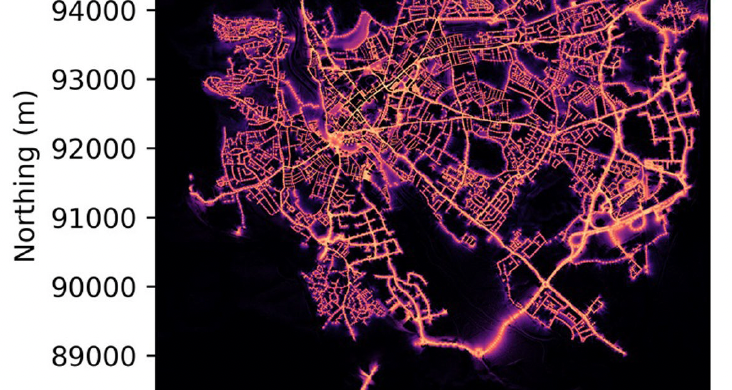
Artificial light at night (ALAN) disrupts natural light cycles, with biological impacts that span from behaviour of individual organisms to ecosystem functions, and across bacteria, fungi, plants and animals. Global consequences have almost invariably been inferred from the geographic distribution of ALAN. How ALAN is distributed in environmental space, and the extent to which combinations of environmental conditions with natural light cycles have been lost, is also key. Globally (between 60◦N and 56◦S), we ordinated four bioclimatic variables at 1.61 * 1.21 km resolution to map the position and density of terrestrial pixels within nighttime environmental space. We then used the Black Marble Nighttime Lights product to determine where direct ALAN emissions were present in environmental space in 2012 and how these had expanded in environmental space by 2022. Finally, we used the World Atlas of Artificial Sky Brightness to determine the proportion of environmental space that is unaffected by ALAN across its spatial distribution. We found that by 2012 direct ALAN emissions occurred across 71.9 % of possible nighttime terrestrial environmental conditions, with temperate nighttime environments and highly modified habitats disproportionately impacted. From 2012 to 2022 direct ALAN emissions primarily grew within 34.4 % of environmental space where it was already present, with this growth concentrated in tropical environments. Additionally considering skyglow, just 13.2 % of environmental space now only experiences natural light cycles throughout its distribution. With opportunities to maintain much of environmental space under such cycles fast disappearing, the removal, reduction and amelioration of ALAN from areas of environmental space in which it is already widespread is critical. 


Environmental impacts of space technology

Gaston, K.J., Anderson, K., Shutler, J.D., Brewin, R.J.W. & Yan, X. 2023. Environmental impacts of increasing numbers of space objects. Frontiers in Ecology and Environment 21, 289-296.

For much of their existence, the environmental benefits of artificial satellites, particularly through provision of remotely sensed data, seem likely to have greatly exceeded their environmental costs. With dramatic current and projected growth in the number of Earth-observation and other satellites in low Earth orbit, this trade-off now needs to be considered more carefully. Here we highlight the range of environmental impacts of satellite technology, taking a life-cycle approach to evaluate impacts from manufacture, through launch, to burn-up during de-orbiting. These include the use of renewable and nonrenewable resources (including those associated with the transmission, long-term storage, and distribution of data), atmospheric consequences of rocket launches and satellite de-orbiting, and impacts of a changing nighttime sky on humans and other organisms. Initial estimations of the scale of some impacts are sufficient to underscore the need for more detailed investigations and to identify potential means by which impacts can be reduced and mitigated.


Entrenching biophobia

Soga, M., Gaston, K.J., Fukano, Y. & Evans, M.J. 2023. The vicious cycle of biophobia. Trends in Ecology and Evolution 38, 512-520.

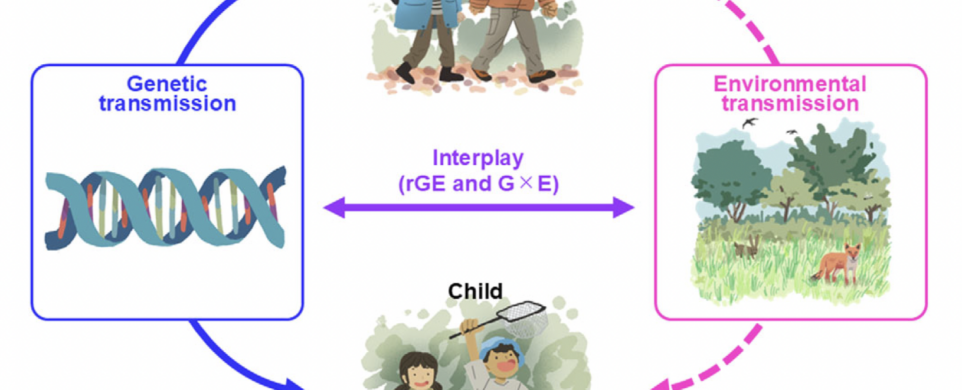
People can express irrational fears and disgust responses towards certain wild organisms. This so-called ‘biophobia’ can be useful and indeed necessary in some circumstances. Biophobia can, however, also lead to excessive distress and anxiety which, in turn, can result in people avoiding interactions with nature. Here, we highlight concern that this reduction in interactions with nature might lead to progressive increases in biophobia, entrenching it more in individuals and across society. We propose the ‘vicious cycle of biophobia’, a concept that encapsulates how excessive aversion towards nature might emerge and grow in society. The vicious cycle of biophobia risks accelerating the extinction of experience, leading to long-term adverse consequences for the conservation of biodiversity.


Transcience in public attention to biological conservation

Jarić, I., Correia, R.A., Bonaiuto, M., Brook, B.W., Courchamp, F., Firth, J.A., Gaston, K.J., Heger, T., Jeschke, J.M., Ladle, R.J., Meinard, Y., Roberts, D.L., Sherren, K., Soga, M., Soriano-Redondo, A., Veríssimo, D. & Roll, U. 2022. Transience of public attention in conservation science. Frontiers in Ecology and Environment, online early.

Societal awareness of, and engagement with, environmental problems is a critical prerequisite for effective conservation programs. Research has revealed a strong general pattern whereby public attention received by cultural products diminishes over time. If transposed to conservation, this transience of societal attention is likely to be of major importance because it can limit motivation to support conservation efforts. We address the concept of attention transience applied to conservation, discuss its major drivers and mechanisms, and provide a short overview of conservation issues for which this phenomenon is expected to be particularly relevant. Attention transience leaves a brief window of opportunity for conservationists to focus public awareness and to mobilize necessary support. In this context, it is critical to maximize the conservation benefits generated during these short bursts of attention, especially through tailored conservation marketing campaigns with targeted message framing and regular efforts to refocus attention on key issues.


Population decline & timing of threats

Cox, D.T.C., Gardner, A.S. & Gaston, K.J. 2023. Diel niche variation in mammalian declines in the Anthropocene. Scientific Reports 13, 1031.

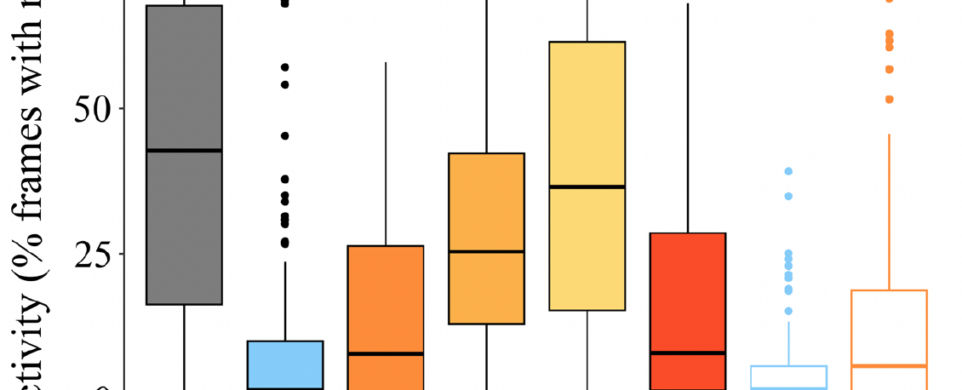
Biodiversity is being eroded worldwide. Many human pressures are most forcefully exerted or have greatest effect during a particular period of the day. Therefore when species are physically active (their diel niche) may influence their risk of population decline. We grouped 5032 terrestrial extant mammals by their dominant activity pattern (nocturnal, crepuscular, cathemeral and diurnal), and determine variation in population decline across diel niches. We find an increased risk of population decline in diurnal (52.1% of species), compared to nocturnal (40.1% of species), crepuscular (39.1% of species) and cathemeral (43.0% of species) species, associated with the larger proportion of diurnal mammals that are primates. Those species with declining populations whose activity predominantly coincides with that of humans (cathemeral, diurnal) face an increased number of anthropogenic threats than those principally active at night, with diurnal species more likely to be declining from harvesting. Across much of the land surface habitat loss is the predominant driver of population decline, however, harvesting is a greater threat to day-active species in sub-Saharan Africa and mainland tropical Asia, associated with declines in megafauna and arboreal foragers. Deepening understanding of diel variation in anthropogenic pressures and resulting population declines will help target conservation actions.


Artificial light confuses anti-predator defences

Bullough, K., Gaston, K.J. & Troscianko, J. 2023. Artificial light a night causes conflicting behavioural and morphological defence responses in a marine isopod. Proceedings of the Royal Society B 290, 20230725.

Encroachment of artificial light at night (ALAN) into natural habitats is increasingly recognized as a major source of anthropogenic disturbance. Research focussed on variation in the intensity and spectrum of ALAN emissions has established physiological, behavioural and population-level effects across plants and animals. However, little attention has been paid to the structural aspect of this light, nor how combined morphological and behavioural anti-predator adaptations are affected. We investigated how lighting structure, background reflectance and the three-dimensional properties of the environment combined to affect anti-predator defences in the marine isopod Ligia oceanica. Experimental trials monitored behavioural responses including movement and background choice, and also colour change, a widespread morphological anti-predator mechanism little considered in relation to ALAN exposure. We found that behavioural responses of isopods to ALAN were consistent with classic risk-aversion strategies, being particularly exaggerated under diffuse lighting. However, this behaviour was disconnected from optimal morphological strategies, as diffuse light caused isopods to become lighter coloured while seeking out darker backgrounds. Our work highlights the potential for the structure of natural and artificial light to play a key role in behavioural and morphological processes likely to affect anti-predator adaptations, survival, and ultimately wider ecological effects.


Benefiting biodiversity

Soga, M. & Gaston, K.J. 2023. Nature benefit hypothesis: direct experiences of nature predict self-reported pro-biodiversity behaviours. Conservation Letters 16, e12945.

Human activities are damaging the world’s ecosystems, posing a serious threat to life on Earth, including humanity. To address this situation, widespread and significant changes in human behavior are necessary. Direct experiences of nature can encourage individuals to adopt positive actions towards biodiversity (hereafter pro-biodiversity behavior), but this relationship has not been well studied. Using a large sample of Japanese adults, we demonstrate that both recent and childhood frequencies of nature experiences are associated with an increased likelihood of exhibiting pro-biodiversity behaviors. This association was found to be consistent across various forms of behaviors, including purchasing ecofriendly products, reducing pesticide use in domestic gardens, and donating to conservation organizations. However, our research also reveals a declining trend of childhood experiences of nature in Japan, resulting in an “extinction of experience.” Our results suggest that enhancing people’s personal experiences with nature could help promote desired behavioral change to halt biodiversity loss.