Lighting up plant communities

Anic, V., Gaston, K.J., Davies, T.W. & Bennie, J. 2022. Long-term effects of artificial nighttime lighting and trophic complexity on plant biomass and foliar carbon and nitrogen in a grassland community. Ecology and Evolution 12, e9157.

The introduction of artificial nighttime lighting due to human settlements and transport networks is increasingly altering the timing, intensity, and spectra of natural light regimes worldwide. Much of the research on the impacts of nighttime light pollution on organisms has focused on animal species. Little is known about the impacts of daylength extension due to outdoor lighting technologies on wild plant communities, despite the fact that plant growth and development are under photoperiodic control. In a five-year field experiment, artificial ecosystems (“mesocosms”) of grassland communities both alone or in combination with invertebrate herbivores and predators were exposed to light treatments that simulated street lighting technologies (low-pressure sodium, and light-emitting diode [LED]-based white lighting), at ground-level illuminance. Most of the plant species in the mesocosms did not exhibit changes in biomass accumulation after 5 years of exposure to the light treatments. However, the white LED treatment had a significant negative effect on biomass production in the herbaceous species Lotus pedunculatus. Likewise, the interaction between the white LED treatment and the presence of herbivores significantly reduced the mean shoot/root ratio of the grass species Holcus lanatus. Artificial nighttime lighting had no effect on the foliar carbon or nitrogen in most of the grassland species. Nevertheless, the white LED treatment significantly increased the leaf nitrogen content in Lotus corniculatus in the presence of herbivores. Long-term exposure to artificial light at night had no general effects on plant biomass responses in experimental grassland communities. However, species-specific and negative effects of cool white LED lighting at ground-level illuminance on biomass production and allocation in mixed plant communities are suggested by our findings. Further studies on the impacts of light pollution on biomass accumulation in plant communities are required as these effect could be mediated by different factors, including herbivory, competition, and soil nutrient availability.


Monitoring nature engagement

Phillips, B.B., Burgess, K., Willis, C. & Gaston, K.J. 2022. Monitoring public engagement with nature using Google Trends. People and Nature, online early.

1. How humans interact with nature affects the health of both people and ecosystems. Yet, long-term data on nature engagement are scarce because traditional survey methods are expensive, time consuming and require commitment over multiple years. Digital data sources (e.g. aggregated data from online searches) have major potential as a supplementary source of information and, in the absence of available data, as a proxy for more direct measurement of nature engagement.

2. Using Google Trends, we created a list of refined and relevant search terms relating to diverse outdoor spaces and activities. We then compared trends in Google search volumes in England across both a 1-year and 10-year period to those from Google Community Mobility Reports, and from nationally representative survey data (Natural England’s People and Nature Survey and the Monitor of Engagement with the Natural Environment).

3. Search, survey and mobility data all support a general increase in public engagement with nature since 2009, and a more substantial increase during, or following, the initial national ‘lockdown’ period of the COVID-19 pandemic in England. Search volumes increased for many urban and rural outdoor green spaces (e.g. woodlands), blue spaces (e.g. reservoirs), exercise activities (e.g. walking, running and hiking) and explicitly nature-based activities (e.g. fishing, wild swimming and encouraging wildlife).

4. Overall, volumes of Google searches were more closely related with longer-term (10-year) trends from survey data, than shorter-term changes during the COVID-19 pandemic. There were statistically significant relationships between search volumes, survey data (self-reported past behaviour) and mobility data (movement trends) for around half of comparisons. Of these, an average of 13–44% of variation in the data was explained.

5. The findings show that Google Trends provides valuable information about public engagement with nature, which can help to supplement existing survey data by providing new insights about behavioural trends. The paper also provides a proof of concept for using Google Trends to understand changes in public engagement with nature, which could be applied to the many countries that lack long-term survey monitoring.


Lighting up food webs

Sanders, S., Baker, D.J., Cruse, D., Bell, F., van Veen, F.J.F. & Gaston, K.J. 2022. Spectrum of artificial light at night drives impact of a diurnal species in insect food web. Science of the Total Environment 831, 154893.

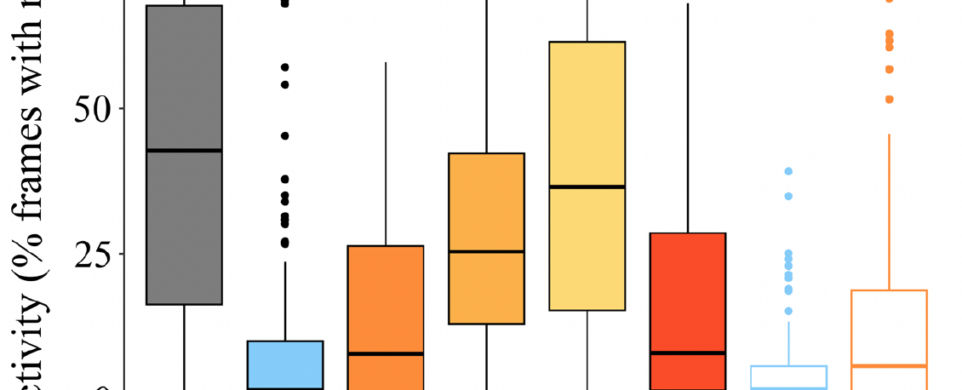
Artificial light at night (ALAN) has become a profound form of global anthropogenic environmental change differing in from natural light regimes in intensity, duration, distribution and spectra. It is clear that ALAN impacts individual organisms, however, population level effects, particularly of spectral changes, remain poorly understood. Here we exposed experimental multigenerational aphid-parasitoid communities in the field to seven different light spectra at night ranging from 385 to 630 nm and compared responses to a natural day-night light regime. We found that while aphid population growth was initially unaffected by ALAN, parasitoid efficiency declined under most ALAN spectra, leading to reduced top-down control and higher aphid densities. These results differ from those previously found for white light, showing a strong impact on species’ daytime performance. This highlights the importance of ALAN spectra when considering their environmental impact. ALAN can have large impacts on the wider ecological community by influencing diurnal species.


Losing rural darkness

Cox, D.T.C., Sánchez de Miguel, A., Bennie, J., Dzurjak, S.A., & Gaston, K.J. 2022. Majority of artificially lit Earth surface associated with non-urban, non-industrial population. Science of the Total Environment 841, 156782.

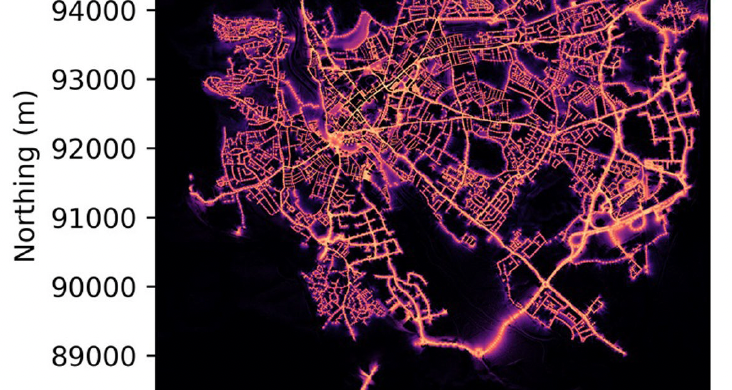
Key to understanding the negative impacts of artificial light at night (ALAN) on human health and the natural environment is its relationship with human density. ALAN has often primarily been considered an urban issue, however although over half of the population is urbanized, the 46 % that are not inhabit a dispersed array of smaller settlements. Here, we determine the global relationships between two dimensions of ALAN, namely direct emissions (radiance) and skyglow, and human density, and howthese relationships vary across continents.We correct the Visible Infrared Imaging Radiometer Suite Day/Night Band (VIIRS DNB) product for albedo, skyglow, airglow, the aurora and permanent snow and ice to represent upward radiance overland at 1.61 ∗ 2.12 km resolution from artificial sources only. For skyglow we use the World Atlas of Artificial Sky Brightness. Globally (between 59°N and 55°S), direct emissions were detected over 26.5 % and skyglow over 46.9 % of land area. Over half of all cumulative direct emissions (54.9 %) were emitted at low levels by the non-urban population, whilst these populations experienced the negative impacts of over two-thirds of all cumulative skyglow (69.8 %). This emphasises the extent of ALAN outside of urban areas, and its similarity in this regard to a number of other forms of pollution. Although powerful sources of rural direct emissions (e.g., industry, recreation) are important contributors of light pollution, cumulatively they only contributed 10% to total direct emissions. The relationship between each dimension of ALAN and population density varied across continents, driven by powerful rural emissions, non-urban populations and urban design. These relationships reflect the unique socio-economic and geographical make-up of each region and inform on where best to target light pollution mitigation strategies, not only in urban areas but also in rural ones.


Sampling bias & environmental niches

Baker, D.J., Maclean, I.M.D., Goodall, M. & Gaston, K.J. 2022. Correlations between spatial sampling biases and environmental niches affect species distribution models. Global Ecology and Biogeography 31, 1038-1050.

Aim: Spatial sampling biases in biodiversity data arise because of complex interactions between geography, species characteristics and human behaviour, including preferences for or against particular species or habitats; biases are therefore not necessarily independent of the environmental niches of species. We evaluate when correlations between spatial sampling biases and environmental niches are likely to affect species distribution models (SDMs) developed both with and without attempts to correct these biases.

Innovation: A virtual species and virtual ecologist framework was used to simulate biodiversity data with either no spatial sampling bias or biases that were correlated (positively or negatively) with one of the environmental variables used to define the environmental niches of the species. The environmental variables used to define the species niche were simulated with spatial autocorrelation operating at multiple spatial scales. Virtual samples were then used to model species distributions, with models evaluated based on their ability to rank the suitability of sites correctly.

Main conclusions: Correlations between spatial sampling bias and environmental niches frequently reduced the rank correlation of model predictions, but the relative importance of these effects varied with species type (greater decline in rank correlation as the environmental niche broadens) and data type (models built using detection/ non-detection data were less affected than those using detection-only data). Bias-correction effectiveness varied depending on the structure of the spatial bias but was also highly variable across methods and dependent on data type. The implications of these results are that spatial sampling bias is a greater concern for SDMs where: (1) the distribution of effort is non-random with respect to an environmental gradient thought to be correlated with a species’ distribution; (2) the species being modelled has a broad environmental niche; and (3) the data for modelling contain only information on detections (i.e., presence only).


Heritability of nature experience

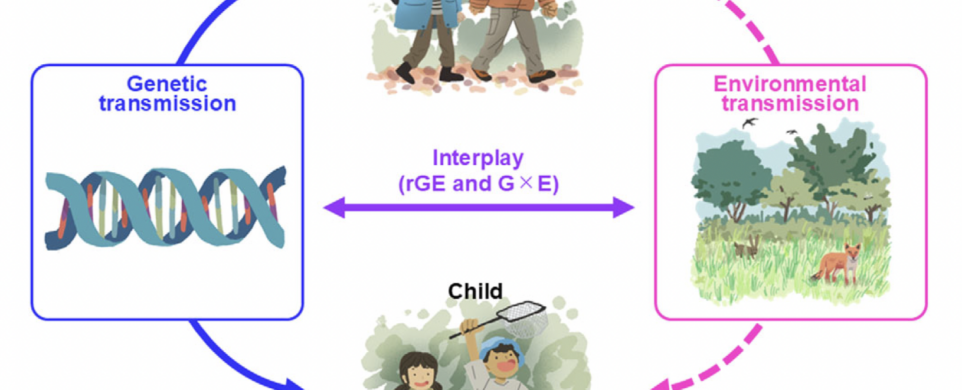
Chang, C.-C., Cox, D.T.C., Fan, Q., Le Nghiem, T.P., Tan, C.L.Y., Oh, R.R.Y., Lin, B.B., Shanahan, D.F., Fuller, R.A., Gaston, K.J. & Carrasco, R.L. 2022. People’s desire to be in nature and how they experience it are partially heritable. PLoS Biology 20, e3001500.

Nature experiences have been linked to mental and physical health. Despite the importance of understanding what determines individual variation in nature experience, the role of genes has been overlooked. Here, using a twin design (TwinsUK, number of individuals = 2,306), we investigate the genetic and environmental contributions to a person’s nature orientation, opportunity (living in less urbanized areas), and different dimensions of nature experience (frequency and duration of public nature space visits and frequency and duration of garden visits). We estimate moderate heritability of nature orientation (46%) and nature experiences (48% for frequency of public nature space visits, 34% for frequency of garden visits, and 38% for duration of garden visits) and show their genetic components partially overlap. We also find that the environmental influences on nature experiences are moderated by the level of urbanization of the home district. Our study demonstrates genetic contributions to individuals’ nature experiences, opening a new dimension for the study of human–nature interactions.


Societal extinction of species

Jarić, I., Roll, U., Bonaiuto, M., Brook, B.W., Courchamp, F., Firth, J.A., Gaston, K.J., Heger, T., Jeschke, J.M., Ladle, R.J., Meinard, Y., Roberts, D.L., Sherren, K., Soga, M., Soriano-Redondo, A., Veríssimo, D. & Correia, R.A. 2022. Societal extinction of species. Trends in Ecology and Evolution, online early.

The ongoing global biodiversity crisis not only involves biological extinctions, but also the loss of experience and the gradual fading of cultural knowledge and collective memory of species. We refer to this phenomenon as ‘societal extinction of species’ and apply it to both extinct and extant taxa. We describe the underlying concepts as well as the mechanisms and factors that affect this process, discuss its main implications, and identify mitigation measures. Societal extinction is cognitively intractable, but it is tied to biological extinction and thus has important consequences for conservation policy and management. It affects societal perceptions of the severity of anthropogenic impacts and of true extinction rates, erodes societal support for conservation efforts, and causes the loss of cultural heritage.


Human-nature interactions

Soga, M. & Gaston, K.J. 2022. Towards a unified understanding of human-nature interactions. Nature Sustainability, online early.

Interest in the direct interactions between individual people and nature has grown rapidly. This attention encompasses multiple academic disciplines and practical perspectives. A central challenge thus lies in creating a rich cross-disciplinary understanding of these interactions, rather than one that might become characterized by little conceptual, terminological and methodological unity. Here, to facilitate the former outcome, we bring together concepts and theories about direct human–nature interactions drawn from diverse disciplines within a unified conceptual framework. Using this framework, we discuss the linkages among key concepts and theories, identify important knowledge gaps and suggest directions for future research.


Horizon scanning

Sutherland, W.J., Atkinson, P.W., Butchart, S., Capaja, M., Dicks, L.V., Fleishman, E., Gaston, K.J., Hails, R.S., Hughes, A.C., Le Anstey, B., Le Roux, X., Lickorish, F.A., Maggs, L., Noor, N., Oldfield, T.E.E., Palardy, J.E., Peck, L.S., Pettorelli, N., Pretty, J., Spalding, M.D., Tonneijck, F.H., Truelove, G., Watson, J.E.M., Wentworth, J., Wilson, J.D & Thornton, A. 2022. A horizon scan of global biological conservation issues for 2022. Trends in Ecology and Evolution 37, 95-104.

We present the results of our 13th annual horizon scan of issues likely to impact on biodiversity conservation. Issues are either novel within the biological conservation sector or could cause a substantial step-change in impact, either globally or regionally. Our global panel of 26 scientists and practitioners identified 15 issues that we believe to represent the highest priorities for tracking and action. Many of the issues we identified, including the impact of satellite megaconstellations and the use of long-distance wireless energy transfer, have both elements of threats and emerging opportunities. A recent state-sponsored application to commence deep-sea mining represents a significant step-change in impact. We hope that this horizon scanwill increase research and policy attention on the highlighted issues.


Concern for nature

Chang, C-C., Le Nghiem, T.P., Fan, Q., Tan, C.L.Y., Oh, R.R.Y., Lin, B.B., Shanahan, D.F., Fuller, R.A., Gaston, K.J. & Carrasco, L.R. 2021. Genetic contribution to concern for nature and proenvironmental behaviour. BioScience, online early.

Earth is undergoing a devastating extinction crisis caused by human impacts on nature, but only a fraction of society is strongly concerned and acting on the crisis. Understanding what determines people’s concern for nature, environmental movement activism, and personal conservation behavior is fundamental if sustainability is to be achieved. Despite its potential importance, the study of the genetic contribution to concern for nature and proenvironmental behaviors has been neglected. Using a twin data set (N = 2312), we show moderate heritability (30%–40%) for concern for nature, environmental movement activism, and personal conservation behavior and high genetic correlations between them (.6–.7), suggesting a partially shared genetic basis. Our results shed light on the individual variation in sustainable behaviors, highlighting the importance of understanding both the environmental and genetic components in the pursuit of sustainability.